
From the Sensex basket, Power Grid, Asian Paints, Tata Motors, Tata Steel, NTPC, Sun Pharma, Mahindra & Mahindra, HDFC Bank, Tata Consultancy Services and JSW Steel were among the major gainers. Kotak Mahindra Bank, Bharti Airtel, Axis Bank, Wipro, ICICI Bank and IndusInd Bank were among the laggards.

'Inflation is not good for industry. Nor for the economy as a whole.'

Following in Apple's footsteps, Alphabet - Google's parent company - is in advanced talks with Foxconn to manufacture Pixel smartphones in Tamil Nadu, an industrial state which will also double up as drone-manufacturing hub for the US tech giant soon. According to a state government release, officials from Google will soon visit Chennai to meet Tamil Nadu Chief Minister MK Stalin to hold discussion on manufacturing of Google Pixel near Chennai.

All the items identified for procurement from domestic defence manufacturers are used in shipbuilding. So far, the defence ministry has notified 127 items where purchase preference is given to local suppliers.

India's largest IT services firm TCS on Thursday reported a 4.99 per cent increase in its September quarter net profit at Rs 11,909 crore. The Tata Group company had reported a net profit of Rs 11,342 crore in the year-ago period, while in the preceding quarter, it had a post tax net of Rs 12,040 crore, a company filing said.

Ukraine is currently in the middle of a strategic offensive into Russia's Kursk region.

Indian pharmaceutical companies are stepping up their efforts to combat the problem of counterfeit drugs, employing a variety of strategies, from packaging innovations to engaging private investigation agencies. The stakes are high, as counterfeit medicines not only harm consumers but also tarnish the reputation of leading brands.

Domestic macroeconomic data announcements, global trends and trading activity of foreign investors would guide market sentiments this week, analysts said. After a record rally, markets may face volatile trends this week amid elevated valuations and investors would also keep a track of global oil benchmark Brent crude and rupee-dollar movement for further cues. "Potential volatility in the stock market is anticipated this week. Elevated valuations remain a concern, with investors now focusing on monsoon progress and its impact on the rural economy.

New business received by Indian manufacturers expanded at the fastest pace since February.

With the recent launch of smartwatches, home-grown smartphone maker Lava is looking to secure a strong foothold in the Indian wearables market. The company aims to capture up to 20 per cent of this segment over the next few years, according to a senior executive.
The Tata group is looking to make a foray into semiconductor (also known as chips) manufacturing and it has set up a business to seize the opportunity, Chairman N Chandrasekaran said on Monday. "At the Tata group, we have already pivoted into a number of new businesses like electronics manufacturing, 5G network equipment as well as semiconductors, in all probability," he said while speaking at the annual general meeting of the IMC Chamber of Commerce and Industry. Chandrasekaran said global supply chains, currently heavily dependent on China, would see a big change in a post-pandemic world with businesses shifting their reliance to other countries.

For the first time in history, the luxury car market is poised to cross the sales mark of 50,000 units in 2024, with Mercedes leading the way

India's services sector growth eased slightly in April but growth of new business and output remained sharp and among the fastest in 14 years amid favourable economic conditions and strong demand, a monthly survey said on Monday. The seasonally adjusted HSBC India Services Business Activity Index fell from 61.2 in March to 60.8 in April, highlighting one of the strongest growth rates seen in just under 14 years. Survey members attributed the latest upturn in output to favourable economic conditions, demand strength and rising intakes of new work.

While duty on products such as methyl alcohol (methanol) and acetic acid has been brought down to 2.5 per cent and 5 per cent, respectively from the existing 10 per cent.

'Investors should consider small and midcaps only if they can handle volatility and have a longer investment horizon.'

The VBL board approved the purchase of SBC Tanzania for Rs 1,304 crore and SBC Beverages Ghana for Rs 127 crore. These own manufacturing/distribution rights for NARTD (PepsiCo branded) beverages in Tanzania and Ghana. The acquisitions will help VBL gain ground in East and West Africa.
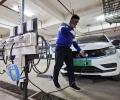
The government on Friday approved an electric-vehicle policy, under which duty concessions will be given to companies setting up manufacturing units in the country with a minimum investment of $500 million, a move aimed at attracting major global players like US-based Tesla. According to an official statement, the companies setting up manufacturing facilities for e-vehicles will be allowed to import a limited number of cars at lower customs duty. The policy seeks to promote India as a manufacturing destination for EVs and attract investment from reputed global EV manufacturers, it added.

Sources said GST exemption on such items would lead to blocked input tax credit, thereby increasing the cost of manufacturing and a higher price for consumers.

Toyota Kirloskar Motor (TKM) has reported a consolidated net profit of Rs 4,787 crore for 2023-24 (FY24) - more than three times the earnings recorded the previous year. This growth can be attributed to robust demand for its vehicles, particularly hybrid models and cross-badged cars from the Toyota-Suzuki alliance.

Crisil Ratings on Wednesday projected India's GDP growth at 6.8 per cent in the next fiscal and said the country will become an upper middle-income nation by 2031 with the economy doubling to $7 trillion. In its India Outlook report, Crisil said the Indian economy will take support from domestic structural reforms and cyclical levers and can retain -- perhaps even improve -- its growth prospects to become the third largest economy by 2031. "After a better-than-expected 7.6 per cent this fiscal, India's real GDP growth will likely moderate to 6.8 per cent in fiscal 2025," said the Crisil India Outlook report.

Trumponomics, poor growth, and high valuation certainly don't make a bullish recipe for Indian markets, warns Debashis Basu.

India's import of personal computers, including laptops and tablets, shot up in September by 42 per cent to $715 million, reversing a year-long downward trend after the government announced it would impose import restrictions on such electronic hardware items in August. The rise in such imports were led by the largest source China (33 per cent) and Singapore (188 per cent), according to data released by the commerce department. On August 3, the Centre had announced it was planning to bring seven products in the information technology hardware segment, such as personal computers, micro computers, mainframe computers, super computers, computer systems and data processing units under the 'restricted' label.

The government's ambitious vision document that aims at achieving electronics manufacturing with a value of $300 billion by FY26 (including exports of $105-130 billion) could end up far lower than the target, according to a reality check this month. The reality check came from the Indian Cellular and Electronics Association (ICEA), which partnered with the government in preparing the document. The members of the ICEA are mobile and electronics companies, and its assessment, based on current trends, indicates that the total electronics production in FY26 will be around $225 billion.

If Tesla comes in, India's position as a manufacturing hub will rise many notches, as it will become only the second country, after China, to have both Apple as well as Tesla.

'Three manufacturing sectors can create jobs by the million: Apparel, food, and electronic assembly.' 'Let's talk to them and ask them what it would take to scale by a factor of ten,' suggests Naushad Forbes.

India's premier defence research organisation DRDO has awarded seven new projects to private entities to develop key military assets including underwater launched unmanned aerial vehicle and long-range remotely operated systems.

India may have to lean more on West Asian nations for supplies of liquefied petroleum gas (LPG), a cooking fuel, in the coming years after Indian state-run refiners drew up big plans to diversify into producing more profitable petrochemicals. This shift leads to reduced LPG output, Indian refining executives said. The mantra for state-run oil companies, from Indian Oil Corporation (IndianOil) to liquefied natural gas (LNG) importer Petronet LNG, which are looking to diversify their businesses from lower-margin fuels, has been value-added petrochemicals.

For India to be atmanirbhar, domestic manufacturers cannot remain merely assemblers of imported parts. Manufacturing in India cannot survive on support of imports forever.

Domestic investors have been increasingly investing in overseas stocks in a bid to diversify their portfolio. US stocks are the favourite for individual investors, though they have been increasingly looking at Chinese equities given the relatively attractive valuations. However, the regulatory crackdown in China and the latest concerns around Evergrande default have resulted in sub-par returns for investors. Edelweiss Greater China Equity Off-shore Fund and Axis Greater China Equity Fund of Fund are down 11 per cent in the past three months, the data from Value Research shows.

Seven electric two-wheeler companies have suffered a cumulative loss of over Rs 9,000 crore on account of unpaid dues and loss of market after their subsidies were stopped last year, the Society of Manufacturers of Electric Vehicles (SMEV) said on Wednesday. These companies have also been directed by the govt to refund the subsidies availed by them. The audit by SMEV's chartered accountants indicates the total, cumulative damages to affected companies could account for over Rs 9,000 crore on a conservative basis, it noted.

After subdued earnings in the first half amid global headwinds, India Inc is taking a cautious approach on their capital expenditure (capex) for the second half of the financial year ending March 2025, according to management commentary. Minutes from the October monetary policy meeting show the Reserve Bank of India's (RBI's) optimism about private investments picking up.

IPOs worth Rs 50,000 crore including Hyundai, NTPC Green Energy and Swiggy are set to hit the market in late October or early November.

The auto ancillary industry - one of the worst hit due to the labour exodus - will need at least three months to get its factories up and running.

As there is a moderation in car sales, dealer stock levels across the entire industry have surged to alarming heights. However, the situation is under control at HMIL.

The new scheme, promoting manufacturing of electric vehicles (EVs) by global majors, will give a fillip to companies like Tesla and its upstart rival Vinfast, both of whom have lobbied for lower import duties from the Centre. While Vinfast has already announced an investment of Rs 4,000 crore to set up an electric vehicle (EV) plant in Tamil Nadu, Tesla's next move will be watched carefully. Four years ago, Musk announced that his company would come to India.

The report also said that in past DEG outbreaks, manufacturers have been suspected of substituting DEG in the place of more expensive, pharmaceutical-grade solvents.
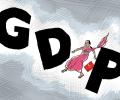
India's economic growth slowed down to 4.4 per cent in the third quarter of 2022-23 mainly due to poor performance of the manufacturing sector. In October-December 2021, the economy grew by 11.2 per cent and by 6.3 per cent in the July-September 2022 quarter, according to data released by the National Statistical Office (NSO) on Tuesday.

Mobile phones and TV sets manufactured in India would become cheaper with Finance Minister Nirmala Sitharaman announcing cuts in Basic Customs Duty (BCD) on import of their components but smokers would have to pay more as the government has increased taxes.

India's three-wheeler exports, which have been on a downhill trajectory over the past few years, are showing no signs of recovery in FY25, with key markets like Sri Lanka, Bangladesh, Nigeria, and Egypt witnessing subdued demand. In May, the country's exports plummeted 11.3 per cent year-on-year (Y-o-Y).

Deighton's unpaid role will be to scale up production domestically, where brands like Barbour and Burberry have already switched factory lines from high-end fashion to PPE.
